When you search for Human Design chart explained, you probably want to understand more than a collection of numbers, coloured shapes and unfamiliar symbols. Perhaps you've generated your own chart out of curiosity, or someone has told you that you're a Generator, Projector, Manifestor, Manifesting Generator or Reflector. You entered your birth details, clicked a button and suddenly found yourself looking at a diagram filled with information that doesn't immediately make much sense.
And then came the obvious question: what am I supposed to do with all this information? For many people, their first introduction to Human Design begins and ends with discovering their Type. They read a short description, recognise a few characteristics and perhaps start following advice about how they should make decisions or manage their energy. Yet their chart contains considerably more information than a Type description, and understanding what those different elements represent is where things become interesting.
Your Human Design Type Is Only the Beginning
Human Design distinguishes between five Types: Generator, Manifesting Generator, Projector, Manifestor and Reflector. Each Type comes with its own Strategy, which offers a particular approach to interacting with the world. This is usually the first information people discover when they generate their chart, partly because it is relatively easy to explain and partly because the descriptions can feel remarkably familiar. But there is an important limitation to looking at your Type in isolation. Two people may share the same Type while having very different charts. Their Authority, Profile, defined and undefined Centers, Channels and Gates can create entirely different patterns within the Human Design framework. This is why a short description of your Type can never tell the whole story. It provides an introduction, but it doesn't explain how all the different aspects of your chart relate to one another.
How You Make Decisions
One of the central elements of Human Design is your Inner Authority. Within the system, Authority describes the decision-making process associated with your particular chart. Some people are encouraged to allow time for emotional clarity, while others are guided to notice their immediate physical responses or quieter intuitive signals. What makes this concept interesting is the opportunity to examine how you actually make decisions in everyday life. Do you tend to agree to things immediately, only to regret them afterwards? Do you spend so much time weighing every possible outcome that you eventually lose sight of what you wanted in the first place? Or do you find yourself making decisions primarily because other people expect something from you? Human Design offers a particular language for exploring these patterns. Whether you find its interpretations useful is something you can discover through observation and personal experience, rather than simply accepting every description as an established fact.
Your Defined and Undefined Centers
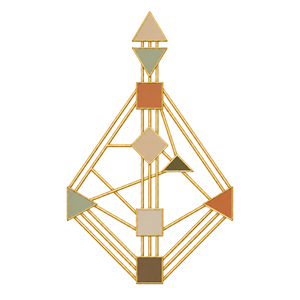
The nine Centers are represented by the geometric shapes in your BodyGraph. Some are coloured, while others remain white. In Human Design, coloured Centers are described as defined. They represent areas associated with more consistent patterns of expression or experience. White Centers are considered undefined or open, suggesting areas in which a person may be more receptive to influences from their surroundings. An undefined Center is not a weakness, nor does it mean that something is missing. For example, someone with an undefined Heart Center may recognise a tendency to prove their worth through achievement, while a person with an undefined Solar Plexus may notice how strongly the emotional atmosphere around them influences their behaviour. These are interpretations within Human Design, not psychological diagnoses. Their value lies in whether they encourage you to recognise patterns you might otherwise overlook. The distinction between defined and undefined Centers also introduces one of the more interesting questions in Human Design: how much of what we consider our personality comes from our own preferences and experiences, and how much has developed through our attempts to adapt to the people around us?
Your Profile: Different Ways of Learning and Experiencing Life
Your Profile is represented by two numbers, such as 1/3, 2/4 or 5/1. Human Design uses twelve Profile combinations to describe different approaches to learning, relationships, personal development and interaction with the outside world. Some Profiles emphasise investigation and the need to understand things thoroughly before acting. Others are associated with learning through experimentation, building relationships or being recognised for the practical solutions they can offer. But again, your Profile doesn't operate independently from the rest of your chart. A 5/1 Profile, for example, cannot be interpreted in exactly the same way for every person who has it. Its meaning is influenced by the person's Type, Authority and other aspects of the BodyGraph. Reading a Profile description can give you something to reflect upon, but understanding how it fits into the broader chart requires a little more exploration.
What About All Those Numbers and Lines?
Once you move beyond the basic elements, you encounter the Gates and Channels. The 64 Gates are connected to the I Ching and represent different themes within the Human Design system. Channels connect two Centers and are associated with particular patterns of expression.
The original teachings of Ra Uru Hu, including the foundations of the Gates and Channels, are documented by Jovian Archive.
Each Gate also has six possible Lines, adding another layer of interpretation. This is where many beginners begin to feel overwhelmed. There are dozens of individual elements to explore, and it can be tempting to read every description separately in the hope that the entire chart will eventually make sense. The difficulty is that Human Design was developed as an interconnected interpretive system. A Gate, for instance, may have a different significance depending on its position, its planetary activation and its relationship with other elements in the chart. Simply collecting individual descriptions can therefore leave you with a great deal of information but very little understanding of how those pieces fit together.
What Your Chart Cannot Tell You
There is another aspect worth discussing, particularly because Human Design is sometimes presented online with far more certainty than it deserves. Your chart cannot establish your intelligence, predict your future or determine what you are capable of achieving. Nor can it provide a medical or psychological diagnosis. Human Design combines ideas from several spiritual and symbolic traditions, but its claims about personality and decision-making have not been scientifically validated. That doesn't automatically make every personal insight someone gains from studying their chart meaningless. It does mean that those insights should be approached as possibilities for reflection rather than objective conclusions about who you are. You remain free to question any interpretation that doesn't correspond with your actual experience.
Human Design Chart Explained: Understanding the Bigger Picture
One of the reasons people become interested in Human Design is that it provides a structured way to examine aspects of themselves they may have struggled to put into words. Perhaps you notice a recurring pattern in your relationships, or you recognise that your approach to work has been shaped by expectations that don't suit you particularly well. You might discover that you have spent years trying to change something about yourself without ever questioning why you considered it a problem in the first place. A Human Design chart can provide a starting point for exploring those questions. However, the most meaningful exploration usually begins when you stop treating the chart as a collection of separate labels and start considering how its different elements relate to each other. Your Type, Authority, Profile, Centers, Channels, Gates and Definition each contribute to the interpretation. None of them tells the complete story on its own. And even then, the chart remains a framework for reflection, not a substitute for your own judgement or lived experience.
Where Do You Begin?
If you haven't generated your chart yet, you can start with the free Human Design chart available on this website. Take your time exploring the basic information. You don't need to understand all 64 Gates or every Channel immediately. Begin with your Type, Authority and Profile, and gradually become familiar with the other elements. If you already know the basics but would like to explore how the different parts of your chart relate to one another, you can also consider a written Human Design Blueprint or a more extensive Deep Reading. Both offer a structured interpretation of your chart, with the aim of making the information easier to understand and relate to your everyday experiences. Because ultimately, learning about Human Design is not about memorising terminology or trying to become the person a chart says you should be. It is about asking questions, observing your own patterns and deciding for yourself which insights are worth taking into your life.