Understanding the Connection Between Human Design and Human Behaviour
Human Design psychology is an interesting subject because Human Design and psychology have more in common than many people might expect. They also raise questions about why people respond differently to similar circumstances and why certain behaviours seem so difficult to change, even when we recognise that they are no longer helping us.
Yet Human Design is not a branch of psychology, and it would be misleading to present it as one. Psychology is an established scientific discipline that studies human thought, emotion and behaviour through research, observation and experimentation. Human Design approaches many of these subjects through an entirely different framework, using a calculated BodyGraph based on birth information to describe what the system considers an individual's energetic configuration.
The distinction is important, particularly now that Human Design has become increasingly popular and is sometimes presented as a scientific method for understanding personality.
Nevertheless, there are some interesting similarities between the questions psychology asks and the themes explored within Human Design. Understanding those similarities, while remaining aware of the differences, can provide a more balanced perspective on what Human Design may offer as a tool for personal reflection.
What Does Psychology Actually Study?
Psychology is concerned with understanding how and why people think, feel and behave as they do. It examines the influence of biological processes, personal experiences, upbringing, relationships and social environments, while also investigating how people develop their beliefs, habits and emotional responses.
Consider someone who finds it extremely difficult to refuse requests from other people. They may regularly agree to responsibilities they do not want, feel guilty when setting boundaries and continue helping others even when they are exhausted.
A psychologist might explore several possible explanations for this behaviour. Perhaps the person grew up in an environment where approval depended on being helpful. Perhaps they learned that disagreement could lead to conflict, or developed a strong need for acceptance through previous experiences.
These explanations are investigated through psychological concepts, observation and, where appropriate, evidence-based assessment.
Human behaviour rarely has one simple cause. Our responses are influenced by an ongoing interaction between personal characteristics, earlier experiences, current circumstances and the people around us.
That complexity is one reason why psychological research distinguishes between assumptions about behaviour and explanations that have actually been tested.
How Human Design Approaches Human Behaviour
Human Design also examines patterns in behaviour, but it begins with the BodyGraph rather than psychological observation or testing.
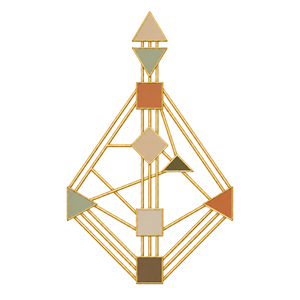
Within the system, the configuration of the nine Centers, the Channels connecting them, the activated Gates and the individual's Definition provides a framework for interpreting how someone is thought to experience and interact with the world.
Type, Strategy and Authority form the foundation of the practical approach, while the Profile, circuitry and other elements introduce additional themes.
Human Design also distinguishes between consistent energetic functions, represented by Defined Centers, and areas considered receptive to conditioning, represented by Undefined and Open Centers.
This is where the comparison with psychology becomes particularly interesting.
Take the example of the person who struggles to refuse requests.
Within Human Design, someone with an Undefined Heart or Ego Center may explore whether they feel compelled to prove their worth through achievement, promises or the approval of others. Someone with an Undefined Solar Plexus may examine whether avoiding emotional confrontation contributes to their difficulty setting boundaries.
Those interpretations offer possible themes for reflection, but they are not psychological diagnoses or established explanations of the person's behaviour. Neither can we conclude that someone has these difficulties simply because a particular Center is Undefined.
A meaningful Human Design interpretation must consider the complete BodyGraph, just as understanding someone's actual behaviour requires attention to their individual circumstances.
The difference lies in how the two approaches arrive at their interpretations.
Conditioning: An Important Point of Connection
One of the strongest similarities between psychology and Human Design can be found in their interest in conditioning.
From childhood onwards, we learn how to behave in response to our surroundings. Families, schools, friendships, workplaces and social expectations all influence the habits and beliefs we develop.
A child who is constantly praised for excellent results may gradually begin to associate personal value with achievement. Another child who receives criticism whenever they express disagreement may learn to remain silent rather than risk rejection.
Such experiences can influence behaviour long after the original circumstances have disappeared.
Psychology studies these processes through different theories of learning, social development, cognition and behaviour.
Human Design approaches conditioning through its own concept of the Not-Self.
Within Human Design, the Not-Self describes patterns that arise when people identify with influences and pressures that the system regards as inconsistent with their individual design. Undefined and Open Centers receive particular attention because they are considered areas where conditioning can have a significant influence.
For example, the Not-Self theme associated with an Undefined Heart Center concerns the pressure to prove one's worth.
Someone might recognise that they regularly accept responsibilities because they want to demonstrate their abilities, even when those responsibilities demand more energy than they can comfortably provide.
Psychology might investigate how that behaviour developed through experience, while Human Design would interpret it in relation to the configuration of the Heart Center and the rest of the BodyGraph.
The observations may overlap, but the explanations are not interchangeable.
It is also important to recognise that a person can struggle with self-worth regardless of whether their Heart Center is Defined or Undefined. Human Design does not provide a scientifically validated method for identifying such difficulties from a birth chart.
The Not-Self and the Psychological Concept of Self-Image
Self-image is another area where Human Design and psychology appear to approach similar questions.
Most people carry an image of themselves that has developed over many years. This image is shaped partly by personal experiences and partly by what others have told them about who they are.
Someone may grow up believing that they are incapable of leadership because they were repeatedly described as quiet or hesitant. Another person may identify so strongly with being independent that asking for help becomes uncomfortable.
Over time, these beliefs can influence the choices people make and the opportunities they allow themselves to consider.
Psychology examines self-image through concepts such as self-concept, identity, self-esteem and learned beliefs.
Human Design introduces a different question: how much of what someone believes about themselves comes from their own consistent characteristics, and how much may have developed through conditioning?
This question can be useful for reflection, even without accepting every explanation offered by Human Design.
For example, someone who has spent years trying to meet expectations that leave them exhausted might begin examining why those expectations became so important. They may recognise a need for approval, a fear of disappointing others or a habit of measuring their value through productivity.
Human Design offers one vocabulary for exploring these patterns. Psychology offers others, supported to varying degrees by scientific research.
I find it important not to confuse the two. Recognising yourself in a Human Design description can encourage useful questions, but recognition alone does not establish that the BodyGraph caused or predicted the behaviour.
Human Design and the Way We Make Decisions
Decision-making is another subject that both psychology and Human Design address, although they approach it differently.
Psychological research examines how decisions are influenced by emotions, previous experiences, cognitive biases, expectations, social pressure and the information available at a particular moment.
Human Design introduces the concepts of Strategy and Inner Authority as a framework for making decisions.
For example, within the Human Design system, someone with Emotional Authority is encouraged to allow time for emotional clarity rather than make important decisions during a temporary emotional high or low.
There is a recognisable similarity here with the everyday observation that our emotional state can influence how we assess situations.
However, this does not establish that Emotional Authority is a scientifically validated decision-making category. Nor does it mean that everyone with Emotional Authority makes decisions in the same way.
The value someone finds in this approach may lie in becoming more attentive to their decision-making habits.
A person who habitually agrees to something immediately might begin allowing themselves more time before making commitments. Someone who tends to follow other people's expectations might start paying closer attention to their own reasons for saying yes or no.
These changes can be explored through observation, but their usefulness should be judged by what actually happens in the person's life rather than assuming that the birth chart provides an infallible answer.
Why the Complete BodyGraph Matters
One of the difficulties with popular Human Design explanations is that they tend to describe people through individual labels.
Someone is a Projector, has a 5/1 Profile or possesses a particular Channel, and that single characteristic becomes the basis for broad conclusions about personality and behaviour.
In reality, even within the Human Design framework, an individual element cannot be interpreted independently of the complete chart.
A Defined Channel introduces a consistent connection between two Centers, but that connection also contributes to the overall Definition. An activated Gate may form part of a complete Channel or remain a hanging Gate, while the circuitry introduces further themes into the interpretation.
The same is true of Open and Undefined Centers, whose significance depends partly on the activations they contain and the connections they may form through interactions with other people.
Consider someone with a Split Definition. Their BodyGraph contains two separate areas of Definition, each internally connected but not connected to the other.
Within Human Design, the Gates and Channels that could bridge that separation are considered significant, particularly when examining how the person interacts with other individuals.
A brief description of Split Definition cannot explain all these possibilities.
The complete configuration must be examined to understand the internal relationships described by the system.
This is one reason why I consider a personalised Deep Reading more informative than relying exclusively on isolated Keynotes. Rather than describing the individual components one after another, a Deep Reading examines how those components are connected and how their combined themes may be explored through personal experience.
That does not turn the interpretation into a psychological assessment, but it does provide a more coherent understanding of the Human Design framework than a collection of general descriptions.
Can Human Design Be Considered Scientific?
This is where we need to make a clear distinction.
Psychology is a scientific discipline, although individual psychological theories and methods vary in the quality and strength of their supporting evidence.
Human Design, by contrast, combines elements drawn from several traditions and systems, including astrology, the I Ching, the chakra system and the Kabbalah, within a framework developed by Ra Uru Hu.
Its central claim is that information associated with the moment of birth can be used to calculate a BodyGraph that reveals an individual's energetic characteristics.
At present, there is no convincing scientific evidence demonstrating that these birth-based calculations reliably determine personality, behaviour or decision-making characteristics.
The fact that someone recognises themselves in a chart interpretation does not establish its scientific validity.
People can recognise meaningful patterns in many forms of personal reflection, including descriptions that are broad enough to apply to a large number of individuals.
This is why scientific validation requires more than personal recognition or positive experiences. A theory must produce claims that can be tested under controlled conditions, and its findings must be sufficiently reliable to withstand independent examination.
Human Design places considerable emphasis on personal experimentation, encouraging people to observe their experiences while following their Strategy and Authority.
That individual experimentation may be meaningful to the person involved, but it should not be confused with scientific validation.
We can therefore appreciate Human Design as a framework for exploring personal experiences without presenting its underlying mechanisms as scientifically established facts.
Can Human Design and Psychology Complement Each Other?
I believe there is room to explore both, provided we remain clear about their different purposes.
Someone who studies Human Design may begin paying greater attention to how they respond to social pressure, which decisions leave them satisfied or dissatisfied, and how their behaviour changes in different relationships.
These observations can lead to interesting questions about personal habits, boundaries, expectations and self-image.
Psychology can help examine such questions using established research and, when needed, professional assessment or therapeutic methods.
Human Design may serve as an additional framework for reflection, but it should not replace psychological care, clinical assessment or evidence-based treatment.
Nor should Human Design interpretations be used to explain away harmful behaviour, assign fixed limitations to people or assume that someone's difficulties are inevitable because of their chart.
I am particularly cautious about descriptions that turn Human Design into another way of categorising people.
A Projector is not automatically wiser than a Generator. Someone with an Undefined Emotional Center is not necessarily emotionally unstable, and a particular Profile does not determine whether someone will be successful in relationships or professional life.
These labels may have specific meanings within Human Design, but they do not provide a complete description of a human being.
I think Human Design becomes more interesting when it encourages questions rather than delivers rigid conclusions.
The Difference Between Recognising a Pattern and Understanding It
The recent popularity of Human Design has made it easy to obtain detailed automated reports describing Types, Profiles, Centers, Channels and Gates.
Many of these reports contain an impressive amount of information, yet readers are frequently left with descriptions of individual Keynotes without a clear explanation of how those elements interact.
Recognising yourself in a particular Keynote can be interesting, but understanding the possible relationships between different themes requires more extensive knowledge of the system.
Even then, we should remain aware of the difference between interpreting a BodyGraph and establishing why someone behaves in a particular way.
Imagine reading that a certain Channel is associated with a need for recognition, while another part of the chart introduces themes involving independence or cooperation.
These descriptions might prompt you to reflect on how you seek approval, what motivates your decisions and how you behave within relationships.
But the chart does not prove that those characteristics are present, nor that the Channels caused them.
The interpretation offers a perspective to examine, and your actual experiences determine whether that perspective is useful.
For readers who want to study Human Design beyond their own chart, my book Human Design Keynotes provides a broader reference to the individual elements of the system. A Deep Reading, on the other hand, brings those elements together within the context of a particular BodyGraph.
Both approaches can help people understand the terminology and internal structure of Human Design more thoroughly, while leaving room for critical thinking and personal observation.
So, Is Human Design a Form of Psychology?
My answer is that Human Design has several interesting connections with psychological subjects, but it should not be described as psychology itself.
Both are concerned, in different ways, with human behaviour, conditioning, relationships, self-image and decision-making. Yet psychology investigates these subjects through scientific methods, while Human Design interprets them through a symbolic and energetic framework based on birth information.
I don't believe we need to pretend that Human Design is scientifically proven to find its concepts worth exploring. At the same time, appreciating the possibilities for personal reflection should never prevent us from questioning its claims.
For me, the most useful approach is to remain curious without becoming uncritical.
When studying a BodyGraph, I want to understand how the Centers, Channels, Gates, Definition and other elements relate to one another within the Human Design system. I am interested in the patterns those connections suggest and the questions they raise about everyday life.
But I also recognise that people's lives cannot be reduced to a chart. Our experiences, relationships, upbringing and choices contribute to who we become, and no single system can account for all that complexity.
Perhaps the most useful question is therefore not whether Human Design can tell us exactly who we are, but whether studying it encourages us to examine our behaviour more carefully.
If it helps us recognise habits, question assumptions and become more attentive to the choices we make, that can be worthwhile.
Human Design may provide a different language for self-reflection, but understanding ourselves remains an ongoing process that extends far beyond any BodyGraph.
